Mirae
Sensing what the body knows before the mind does
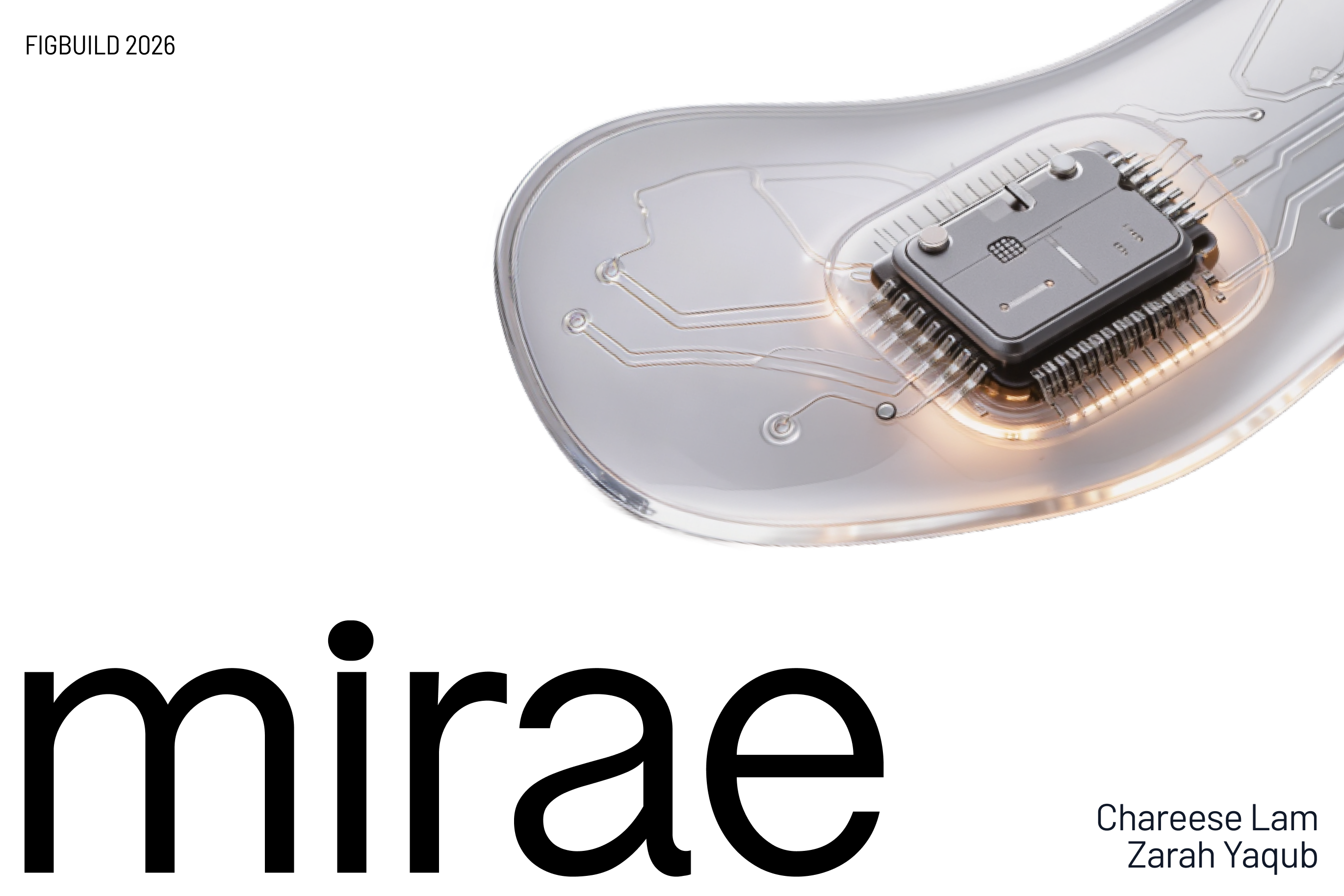
Mirae is a speculative bio-adaptive system that helps people sense stress, avoidance, and habit loops before those patterns surface — then uses an AI guide to step in at the right moment and support a better choice.
Built for FigBuild 2026 with Chareese Lam, the concept pairs a wearable sensing patch with a companion interface. Together they translate the body's quiet signals into feedback a person can actually act on, turning an invisible internal state into a moment of self-awareness rather than one more number to track.
The Premise
The body knows first. A tightening chest, a held breath, the pull to put something off — these register long before the mind can name what's happening. Mirae starts from that gap: the window between what the body feels and what we consciously notice is exactly where better choices get made, or missed.
Most wellness tools arrive too late. They report on a state after it has passed — steps walked, hours slept, a stress score at the end of the day. Mirae asks what it would mean to meet a state as it forms, while there's still room to respond.
What Mirae Is
A patch that senses, a guide that responds. The wearable reads physiological and neurochemical signals through the skin; the AI reads the pattern and surfaces a small, timely nudge — a prompt to breathe, to pause, to notice the loop you're about to repeat.
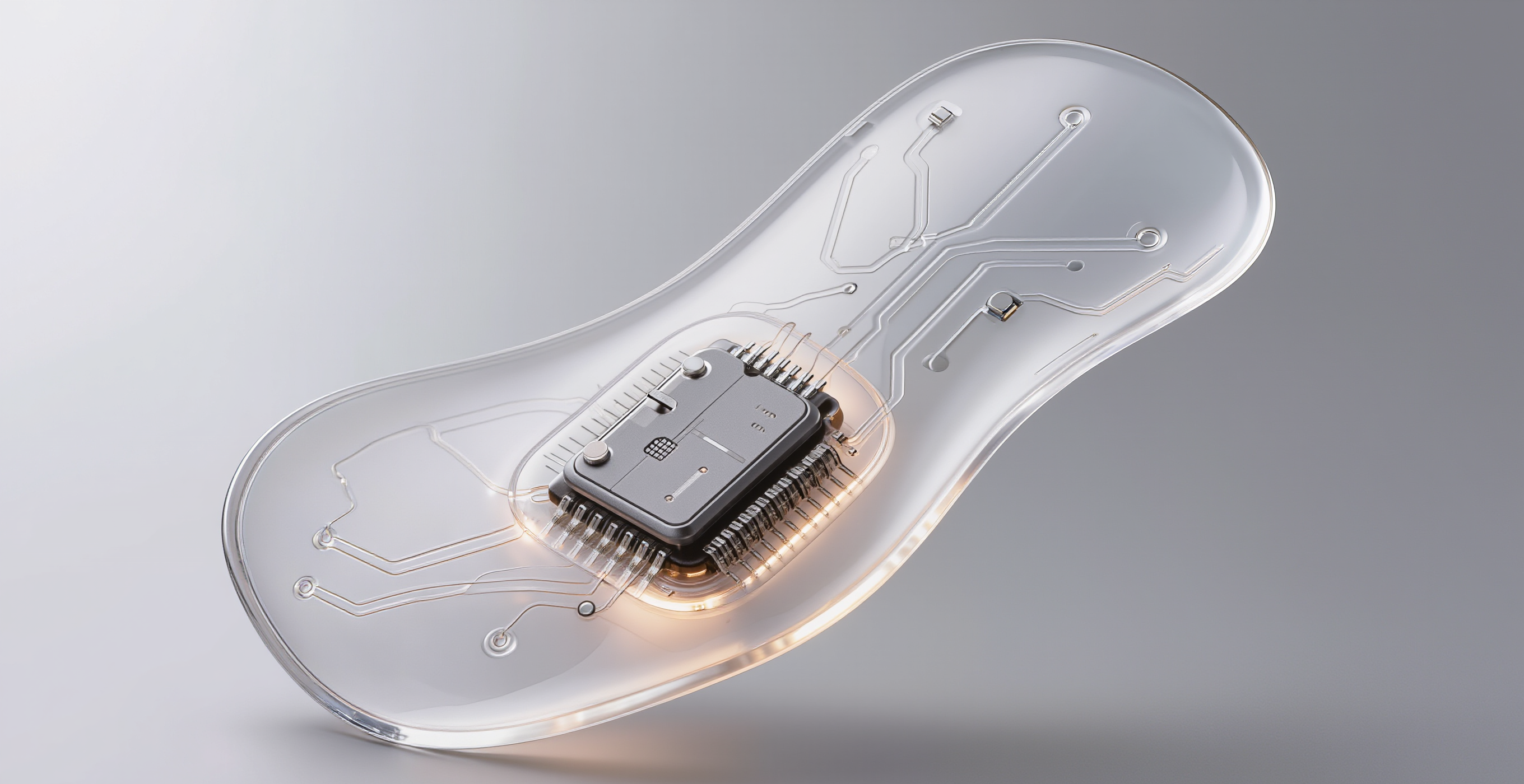
The form was a deliberate choice. A bio-sensing device can easily read as clinical or surveillant, so we designed the patch to feel closer to skin than to hardware — translucent, soft-edged, quietly present rather than demanding attention.
The value isn't in any single screen. It is in how the hardware, the AI interpretation, and the interface hand off to each other — a signal picked up at the skin becomes a read of your state, which becomes one small prompt at the moment it can still change something.
System diagram — patch senses, AI interprets the pattern, interface surfaces a single timely nudge. Horizontal and simple: the one diagram every reviewer can remember
The companion interface is where a body signal becomes something a person can act on. It shows the state, not the score — no chart to optimize against, no streak to break.
Companion interface — three key screens: the ambient state view, a nudge as it arrives, and the reflection after a loop is broken
The Concept in Motion
The concept film walks through a day with Mirae: how a signal becomes a nudge, and how a nudge becomes a choice.
Designing the Invisible
The hardest part was picturing what can't be seen. Hormonal and neurochemical shifts have no natural image, and the wrong visual language turns a supportive tool into a clinical readout — or worse, a new source of anxiety about your own body.
So the work became translation: complex internal processes rendered as calm, legible cues, held in a supportive tone from start to finish. Mirae observes and offers; it never diagnoses or scolds. The aim was self-awareness, not self-optimization.
Visual language exploration — the rejected clinical readouts beside the calm cues we landed on, showing how the tone was found
What We Learned
Ground the speculation in feeling. Designing for something this personal taught us to anchor a forward-looking concept in genuine emotional need rather than futuristic aesthetics — to simplify scientific complexity into something a person can feel understood by, and to use design to build awareness of the self instead of pressure to perform.
What's Next
- Refining the sensing logic behind how internal states are detected
- Expanding the AI guidance system to adapt across different emotional and behavioral contexts
- Deepening the research into interoception, neuroplasticity, and habit change
Outcome
A concept that feels both ambitious and believable. Mirae proposes a closer relationship between body, behavior, and technology — one where a device helps you notice yourself in the moment, and meet what you're feeling before it decides for you.